
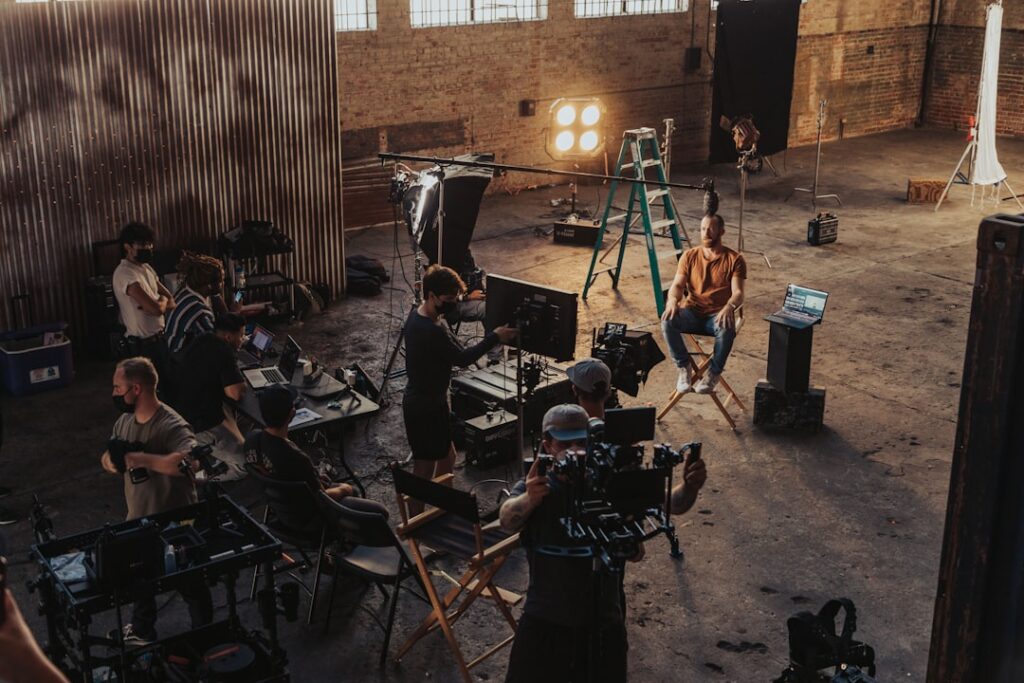
Strength training for film crew should build capacity in the legs, hips, trunk, upper back, shoulders and grip without adding fatigue that compromises the job. Two full-body sessions per week can be enough for many crew members. During demanding production blocks, shorter maintenance sessions are often more useful than trying to set gym records.
As of 08/2026, the current ACSM resistance-training guidance recommends training all major muscle groups at least twice per week and places consistency ahead of complicated programming.
What changed?
- 08/2026: Added the 2026 ACSM resistance-training guidance and a two-day crew programme.
- 08/2026: Added department-specific capacity examples and production-week adjustments.
Why is physical film work not the same as strength training?
A physically demanding job creates load, but the load is not always balanced or progressive. Crew may repeat the same carry, kneel on one side, hold a camera position, reach overhead or work around equipment for hours. Strength training can prepare the body more evenly and build reserve capacity around those repeated demands.
Strength training does not replace safe staffing, lifting equipment, department procedures, breaks or manual-handling controls. Fitness is one layer of preparation, not permission to exceed a safe task or work through pain.
Which areas should film crew train?
| Area | Production relevance | Training examples |
|---|---|---|
| Legs and hips | Standing, stairs, low positions, pushing and carrying | Squats, split squats, hinges, step-ups and sled work |
| Trunk | Transferring force and maintaining positions under load | Carries, anti-rotation work and controlled bracing |
| Upper back | Supporting camera, grip, rigging and overhead tasks | Rows, pulldowns and scapular control |
| Shoulders | Reaching, holding, lifting and operating equipment | Pressing, controlled raises and rotator-cuff capacity |
| Grip and carries | Handling cases, stands, tools and awkward objects | Farmer carries, suitcase carries and timed holds |
| Ankles and feet | Long standing, uneven locations and repeated walking | Calf work, balance and controlled ankle range |
How do departments differ?
| Department | Common physical demands | Useful emphasis |
|---|---|---|
| Camera | Static holds, low positions, shoulder loading and repeated setups | Upper-back endurance, trunk control, legs and shoulder capacity |
| Grip | Carrying, pushing, pulling, rigging support and awkward loads | Hinges, carries, upper back and work capacity |
| Lighting | Stands, cables, ladder work and overhead reach | Legs, shoulders, grip and controlled overhead range |
| Art department | Building, dressing, floor work, tools and varied manual tasks | Hips, trunk, wrists, carries and general strength |
| Sound | Boom positions, equipment bags and static postures | Shoulders, upper back, trunk and position changes |
| Locations and production | Walking, stairs, long standing, travel and variable carrying | Leg strength, aerobic base and general capacity |
For movement options during the day, see on-set mobility for camera, lighting and art department crew.
What is a practical two-day strength plan for film crew?
The programme below is a general framework. Start with loads and ranges that allow consistent technique. A new trainee may use two sets per exercise, while an experienced trainee may use more volume when the production schedule allows.
| Session A | Session B |
|---|---|
| Squat or supported split squat | Hinge or deadlift variation |
| Row variation | Pulldown or assisted pull-up |
| Push-up or horizontal press | Landmine or overhead press where appropriate |
| Farmer carry | Suitcase carry |
| Calf work and trunk control | Step-up and trunk control |
Keep most sets one to three technically good repetitions away from failure. Crew strength training should build capacity without creating soreness that makes ladders, low positions or equipment handling harder the next day.
How should training change during a long production week?
NIOSH notes that long hours can disturb sleep, increase exposure to hazards and reduce recovery time. During a heavy production week, the training goal changes from building fitness to maintaining useful strength and movement.
| Workload | Training response |
|---|---|
| Normal prep week | Use two or three full sessions and progress gradually |
| Five or six long production days | Use one or two 20-to-35-minute maintenance sessions |
| Night-shoot block | Protect sleep opportunity and reduce high-intensity work |
| Heavy manual day | Avoid duplicating the same loaded patterns after work |
| Travel or location change | Use portable bodyweight, band or hotel-gym options |
| Pain or unusual symptoms | Stop and seek the appropriate assessment |
Can short sessions still build useful capacity?
Yes. The 2026 ACSM update emphasises that the biggest improvement comes from doing resistance training consistently. A 25-minute session with four familiar exercises can be more useful than skipping the week because a full hour is unavailable.
- Choose one lower-body pattern: squat, split squat, hinge or step-up.
- Choose one upper-body pull: row or pulldown.
- Choose one push: push-up, chest press or landmine press.
- Finish with a carry or trunk exercise: keep the load controlled and the path clear.
What recovery matters most for film crew?
Sleep opportunity, regular food, hydration and lower training volume during the hardest calls matter more than novelty recovery products. The World Health Organization recommends regular aerobic activity and muscle-strengthening work for adults, but weekly targets should be distributed around the actual job rather than forced into one exhausted day.
Use how to stay fit during 12-hour film shoots for scheduling and how to eat well from film catering and craft services for practical nutrition choices.
When should crew seek medical assessment?
Persistent pain, a recent injury, chest symptoms, numbness, weakness, unexplained swelling or sudden loss of movement should be assessed by an appropriately qualified healthcare professional. Strength work should not be used to test or treat an undiagnosed problem.
Frequently asked questions
How often should film crew strength train?
Many film crew members can use two full-body strength sessions per week, then reduce volume during long calls, night shoots or physically heavy production blocks.
Does working on set count as strength training?
Physical set work creates load, but it does not consistently train all major muscle groups through balanced and progressive patterns.
What exercises are best for film crew?
Useful film crew exercises often include squats or split squats, hinges, rows, presses, carries, calf work and trunk control.
Should film crew train after a 12-hour shoot?
Film crew should train after a 12-hour shoot only when recovery, symptoms and workload support it, and a short maintenance session may be more appropriate than hard training.
Sources and further reading
- American College of Sports Medicine: 2026 resistance-training guidelines update
- World Health Organization: Physical activity fact sheet
- NIOSH: Shift work and long work hours
- Film and TV Charity: Physical wellbeing in film and television
- UK Health and Safety Executive: Manual handling at work
Featured photo by Jakob Owens on Unsplash.
About the author
Kundai Murapa is a Cape Town-based professional stunt performer and film-industry fitness coach. Working in film since 2012, he founded TraceFit to provide strength, conditioning and functional mobility programmes for actors, stunt performers and film crews.
Explore Fit2Film coaching for film crews and production teams.
