
To eat well from film catering and craft services, build meals around a practical combination of protein, carbohydrate, vegetables or fruit and fluids. Use craft services to bridge long gaps between meals, not to replace every meal, and keep a backup option for delays, dietary needs or unfamiliar locations.
Film-set nutrition has to work with call times, unit moves, weather and whatever the production provides. A rigid menu is less useful than a simple decision framework that can be applied in Cape Town, the UK, the United States or Canada.
Published 4 August 2026.
What is the simplest film-set meal framework?
| Meal component | What to look for | Why it helps |
|---|---|---|
| Protein source | Eggs, yoghurt, fish, chicken, meat, beans, lentils, tofu or another suitable option | Supports general recovery and makes the meal more complete. |
| Carbohydrate source | Oats, bread, rice, potatoes, pasta, wraps, fruit or another familiar option | Provides useful energy for long calls and physical work. |
| Vegetables or fruit | Any available variety that suits your needs | Adds fibre, vitamins and minerals. |
| Fluids | Water plus other suitable drinks | Supports hydration across long or hot production days. |
| Optional fats or sauces | Nuts, seeds, avocado, oils, dressings or other suitable additions | Adds flavour and can make a meal more satisfying. |
This is a flexible structure, not a requirement to make every plate perfect. The NHS Eatwell Guide provides a broader public-health model for balance across the day or week.
How should you approach breakfast at an early call?
Choose familiar foods you can tolerate early. A practical breakfast combines a carbohydrate source with protein and fluids. Examples might include oats with yoghurt and fruit, eggs with toast, or a breakfast wrap with a suitable filling.
If a full meal feels difficult at the call time, use a smaller option and plan a second eating opportunity later. Avoid turning a missed breakfast into an entire day of catching up at craft services.
What should you choose at unit catering?
- Scan the available options before filling the plate.
- Choose a protein source that works for you.
- Add a carbohydrate source that matches the length and physical demand of the day.
- Add vegetables or fruit where available.
- Take water or another suitable drink and plan the next eating opportunity.
This approach works with many cuisines and does not depend on weighing food, counting calories or avoiding entire food groups. Individual medical, allergy, religious or therapeutic nutrition needs require appropriate planning with the production and qualified professionals.
How do you use craft services without constant grazing?
Craft services can be useful when meal times move or the gap between meals is long. Choose a snack with a clear purpose: bridging to lunch, supporting a physically demanding block or providing something familiar during a unit move.
| Situation | Practical option |
|---|---|
| Long gap before the next meal | Fruit with yoghurt, cheese, nuts or another protein-containing option. |
| Short break before physical work | A familiar carbohydrate snack plus water. |
| Hot exterior location | Fluids and foods that are safe in the available storage conditions. |
| Cold exterior location | A warm drink and a balanced snack or meal when available. |
| Late wrap and travel | A simple backup meal that does not depend on one final catering window. |
Food safety matters. Use sealed or appropriately stored options, follow production guidance and do not keep perishable foods at unsafe temperatures.
What should you pack as a backup?
- A refillable water bottle where production rules allow it.
- A shelf-stable snack you already know works for you.
- A simple backup meal for known long travel or unit moves.
- Any medically required food, supplies or medication managed according to professional advice and production policy.
- Clear written allergy information when relevant.
The objective is resilience when the schedule changes. A backup should support the catering plan, not create pressure to carry an elaborate personal kitchen.
How does a physically demanding department change food choices?
Camera, grip, lighting, art department and stunt work can create substantial physical load. Regular meals and fluids may become more important on hot locations or heavy manual days. Production and post roles may have long static periods, so meal timing and movement breaks can help prevent the day from becoming one continuous desk-side snack.
See How to Stay Fit During 12-Hour Film Shoots and On-Set Mobility for Camera, Lighting and Art Department Crew.
What changes on night shoots?
Keep the same basic meal structure, but plan around the full shift and the sleep period that follows. Very large meals immediately before trying to sleep may not suit everyone. Use familiar options, maintain fluids and avoid relying on food or caffeine to override unsafe drowsiness.
The Night-Shoot Recovery guide covers sleep opportunity, light, caffeine timing and training adjustments in more detail.
When should a registered dietitian be involved?
Seek qualified nutrition support when there are medical conditions, significant gastrointestinal issues, allergies, eating-disorder concerns, therapeutic diets or production briefs that involve substantial dietary change. A general article cannot assess individual needs.
Good film-set nutrition is consistent, available and compatible with the work. It does not need to be perfect.
Film-set nutrition support by territory
TraceFit is based in Cape Town and supports film professionals locally and through online Fit2Film coaching in the United Kingdom, the United States and Canada. Terminology changes from unit catering to craft services, but the planning principles stay the same: regular opportunities, balanced choices, suitable fluids and a realistic backup.
Explore the main Film Industry Fitness guide or Fit2Film Crew.
Frequently asked questions
What is craft services on a film set?
Craft services generally provides snacks, drinks and lighter food between scheduled meals. Exact arrangements vary by production and territory.
What should film crew eat during a 12-hour shoot?
Use regular balanced meals and planned snacks built from familiar protein, carbohydrate, fruit or vegetables and suitable fluids. Individual needs vary.
How can film crew avoid an energy crash?
Regular meal opportunities, adequate fluids, a useful carbohydrate source and a realistic backup option are more dependable than waiting until exhaustion or relying on one stimulant-heavy snack.
Is this guide suitable for food allergies or medical diets?
It offers only general information. Allergies, medical diets and significant symptoms require coordination with the production and advice from appropriately qualified healthcare or nutrition professionals.
Sources and further reading
- NHS: The Eatwell Guide
- NHS: Water, drinks and hydration
- Film and TV Charity: Physical wellbeing in film and TV
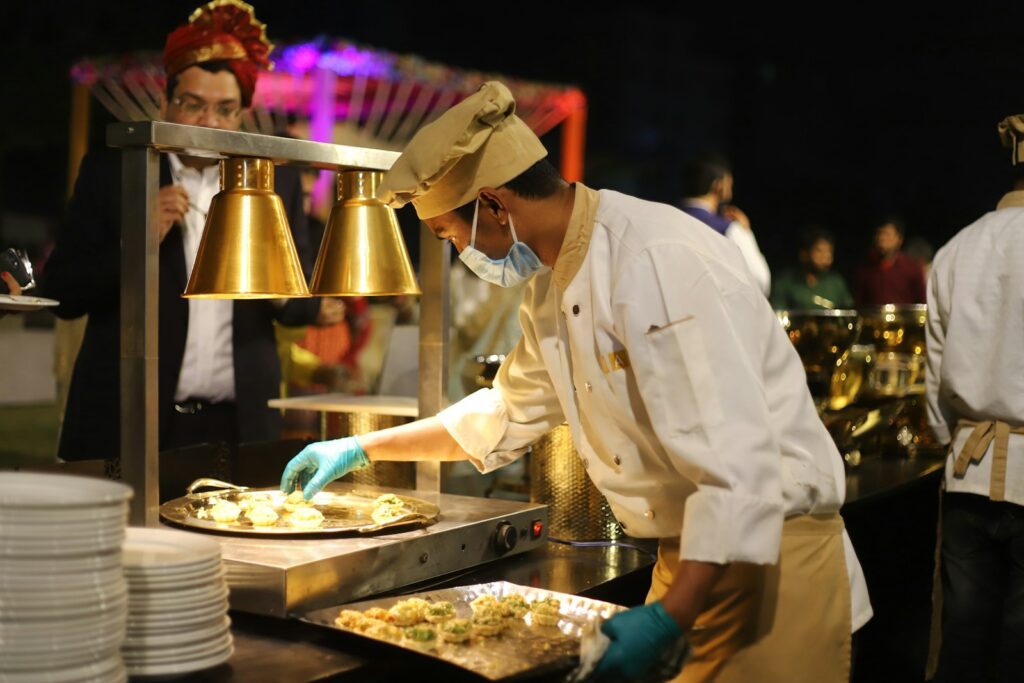
Featured photo by Charanjeet Dhiman on Unsplash.
About the author: Kundai Murapa is a Cape Town-based professional stunt performer and film-industry fitness coach. Working in film since 2012, he founded TraceFit to build strength, conditioning and functional mobility programmes around the realities of production.
