
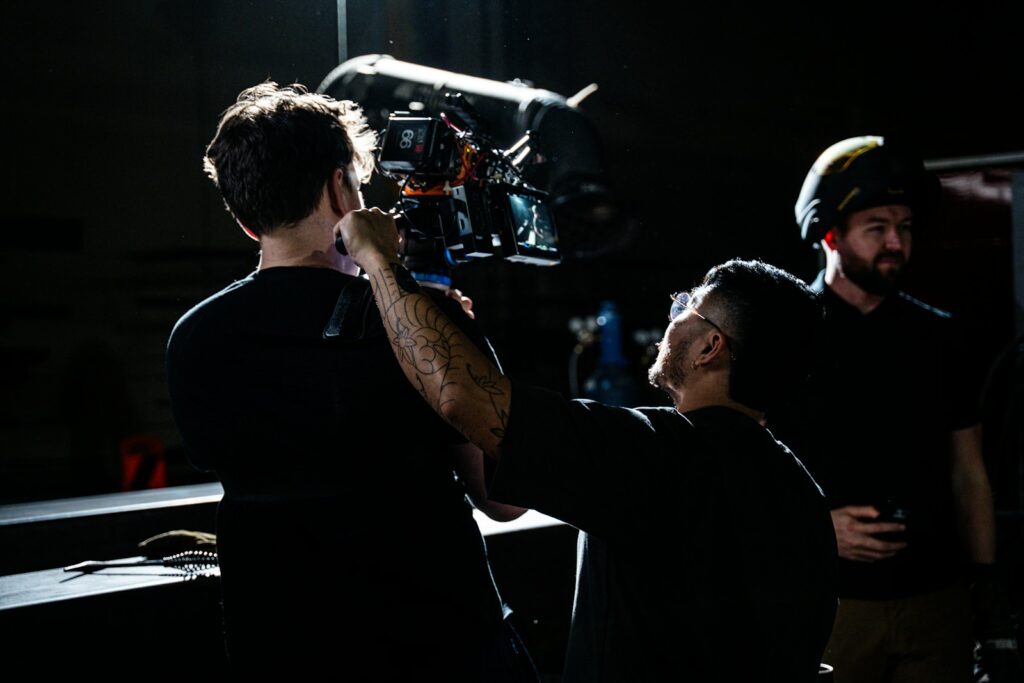
On-set mobility should be brief, active and specific to the work being done. Camera, lighting and art department crew benefit from changing position, moving joints through comfortable ranges and maintaining strength around the hips, shoulders, upper back and trunk. Mobility work is support for the job. It is not a substitute for safer equipment, task rotation, production risk controls or clinical care.
Functional mobility means being able to control a useful range of motion. For film crew, that range must transfer to carrying, crouching, standing, reaching, working at a monitor or spending long periods in one position.
Published 4 August 2026.
Why do film departments need different mobility plans?
The physical demands vary by department and by day. The UK Health and Safety Executive notes that awkward postures and prolonged static positions can increase injury risk. The correct response starts with work design and production safety, then uses movement and fitness as additional support.
| Department | Common physical demand | Mobility emphasis |
|---|---|---|
| Camera | Shoulder-supported loads, crouching, repeated setup changes | Upper back rotation, shoulder control, hips and ankles. |
| Lighting and grip | Carrying, overhead work, pulling and manual handling | Shoulder blade control, thoracic movement, hips and trunk strength. |
| Art department | Building, painting, floor-level work, repetitive hand tasks | Hips, ankles, upper back, wrists and position changes. |
| Production and video village | Long sitting or standing at screens | Walking, hip movement, upper-back extension and posture changes. |
| Hair, makeup and costume | Sustained standing and detailed hand work | Neck and upper-back movement, hands, hips and feet. |
What is a six-minute on-set mobility reset?
Use this only in a safe location, off the working floor and with production permission. Movements should feel controlled and comfortable. Stop if there is pain, dizziness or unusual symptoms.
- Walk or march gently for one minute.
- Complete slow ankle rocks or supported calf raises for one minute.
- Use controlled sit-to-stands or shallow split-stance knee bends for one minute.
- Move the upper back through gentle rotations for one minute.
- Use wall slides or comfortable shoulder circles for one minute.
- Finish with a relaxed walk and slow breathing for one minute.
The routine changes position and creates a small movement opportunity. It is not a warm-up for hazardous manual handling and does not authorise someone to perform a task outside production safety procedures.
How should camera crew approach shoulder mobility?
Camera work often needs shoulder endurance and upper-back control, not only stretching. Combine gentle movement with strength work away from set: rows, carries, controlled pressing and exercises that build tolerance in the positions used on the job.
If a rig, support or operating position repeatedly causes symptoms, the equipment setup and work process require review. The HSE guidance on awkward postures recommends reducing the time spent holding or repeating them and avoiding prolonged static positions.
What helps lighting and grip crew?
Lighting and grip work can include carrying, pulling and overhead tasks. Functional mobility should support these positions through controlled shoulder range, trunk stability, hip strength and good task preparation. Heavy manual handling must still be addressed through production risk assessment, team handling and appropriate mechanical help.
The HSE’s manual-handling guidance prioritises changing the task, load and environment where possible. A stretch does not remove a handling hazard.
What helps art department crew?
Art department tasks may alternate between fine detail, floor-level work, lifting and long static periods. Use position changes more often than one long stretching session. Rotate between standing, supported kneeling, sitting and walking where the task and production allow.
Strength sessions away from set can develop squat, hinge, carry and upper-back capacity. During a long call, the priority is usually maintaining comfortable movement rather than adding a hard workout.
When should mobility happen during a shoot day?
| Timing | Purpose |
|---|---|
| Before the call or task block | Prepare the ranges needed for the planned work. |
| During natural resets | Change position and reduce prolonged static time. |
| At meal or unit breaks | Walk and use a brief active reset if space and safety allow. |
| After wrap | Use easy movement to transition out of the day’s repeated positions. |
| On a recovery day | Build controlled range with more time and less production pressure. |
The HSE work-routine guidance supports breaks or activity changes that allow people to move, stretch and change posture during screen-based work.
Can mobility prevent film-set injuries?
No routine can prevent every injury. Film and TV work includes hazards that require production-level controls, suitable equipment, competent supervision and early symptom reporting. The Film and TV Charity reports substantial injury and physical-health concerns among crew, which makes system-level safety essential.
Persistent pain, weakness, numbness or symptoms affecting work should be assessed through the appropriate production process and by a qualified healthcare professional.
How does mobility fit with film crew fitness?
Mobility is one part of a complete plan. Strength develops capacity, aerobic work supports recovery and sleep and nutrition influence how well the plan can be tolerated. Use How to Stay Fit During 12-Hour Film Shoots as the main crew-fitness guide.
For night work, continue to Night-Shoot Recovery for Film Crew.
Functional mobility coaching by territory
TraceFit provides Cape Town-based coaching and online functional mobility programming for film professionals in the United Kingdom, the United States and Canada. Programmes are adapted for department demands, available equipment, climate, travel and the production schedule.
Explore Fit2Film Crew and the main Film Industry Fitness guide.
Related: Build reserve capacity outside the workday with strength training for film crew.
Frequently asked questions
What is functional mobility for film crew?
It is the ability to control useful ranges of movement for production tasks such as carrying, crouching, standing, reaching and changing position.
How often should crew take movement breaks?
Use natural task changes and production-approved breaks to change posture regularly. The exact timing depends on the job, safety requirements and workflow.
Should camera operators stretch their shoulders every day?
Gentle movement may be useful, but shoulder capacity also depends on strength, equipment setup and workload. Persistent symptoms need appropriate assessment.
Can mobility exercises replace manual-handling training?
No. Manual-handling hazards require production risk controls, training, suitable equipment and changes to the task or load where appropriate.
For the broader movement framework, read Functional Mobility for Film Industry Professionals.
Sources and further reading
- UK Health and Safety Executive: Upper-limb disorder risk factors
- UK Health and Safety Executive: Reducing awkward postures
- Film and TV Charity: Physical wellbeing in film and TV
Featured photo by Redd Francisco on Unsplash.
About the author: Kundai Murapa is a Cape Town-based professional stunt performer and film-industry fitness coach. Working in film since 2012, he founded TraceFit to build strength, conditioning and functional mobility programmes around the realities of production.
