
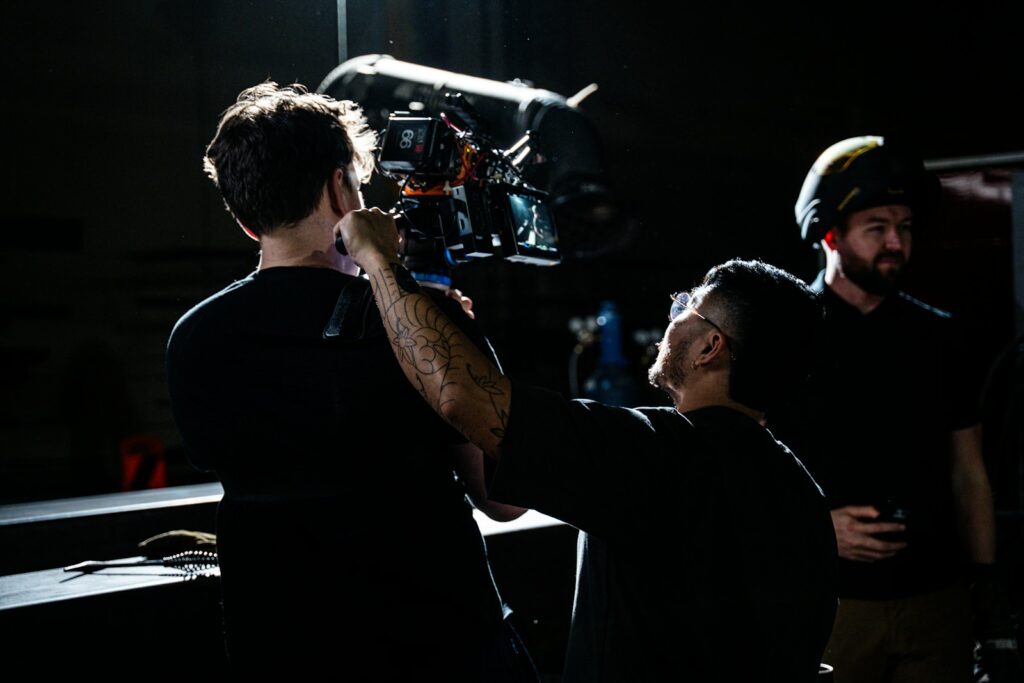
Functional mobility training develops usable movement range, control and strength for the positions a person actually needs. For actors, stunt performers and film crews, that means preparing for rehearsals, equipment handling, repeated takes, long static periods, travel and changing production workloads. It is not a collection of extreme stretches, and it does not replace medical treatment or technical stunt instruction.
What functional mobility means in film-industry fitness
Mobility is the ability to move a joint through a useful range with control. Flexibility describes how far a tissue or joint can be moved, while strength helps a person manage force within that range. Functional mobility combines those qualities around real tasks.
| Quality | What it describes | Film-industry example |
|---|---|---|
| Flexibility | Available passive range | How far the hip can move when relaxed |
| Mobility | Active range with control | Reaching a low camera position without losing balance |
| Strength | Capacity to produce and manage force | Carrying equipment or repeating a movement under load |
| Functional mobility | Range, control and strength applied to a task | Moving between standing, kneeling and floor positions during a shoot |
Good programming therefore combines appropriate strength work, controlled movement and recovery. The film industry fitness guide explains how these elements fit into a broader production-ready plan.
Why production work creates specific mobility demands
Film work often alternates between long periods of waiting and short periods of concentrated physical demand. Call times, locations, weather, protective equipment, repeated takes and limited space can all change what is practical on a given day. A useful plan accounts for that variability instead of treating every week like a normal gym week.
| Role or department | Common demands | Useful training emphasis |
|---|---|---|
| Actors | Character movement, marks, repeated takes and continuity | Role-specific control, repeatable positions and filming maintenance |
| Stunt performers | Technical rehearsals, repeat efforts and changing intensity | Strength, controlled range, work capacity and recovery around the stunt team |
| Camera and grip | Static holds, kneeling, low positions and equipment handling | Shoulder, trunk, hip and ankle control |
| Lighting | Reaching, carrying, ladder work and overhead tasks | Shoulder control, trunk strength and task-specific capacity |
| Art department | Building, dressing, floor work and varied manual tasks | Hip, spine, wrist and loaded-carry capacity |
For department-specific examples, see on-set mobility for camera, lighting and art department crew.
Five principles of functional mobility training
1. Train the range you can control
More range is not automatically better. The useful goal is enough movement for the task, supported by control and appropriate strength. Progress should remain comfortable and technically consistent.
2. Match movement work to the job
A camera operator who spends time in low positions may need a different emphasis from an actor preparing for dance rehearsals. The starting point is the real demand, not a generic list of stretches.
3. Use short movement breaks during long calls
Brief, comfortable changes of position can be more realistic than a full session during production. Standing, walking when permitted, gentle joint movement and relaxed breathing can help break up prolonged static time. These are general movement options, not treatment for pain or injury.
4. Adjust training to production workload
Pre-production can allow more deliberate strength and conditioning. During principal photography, the priority often shifts toward maintaining capacity, managing fatigue and staying ready for the next call. The guide to training between stunt jobs versus during production shows this change clearly.
5. Treat recovery as part of the plan
Sleep opportunity, travel, nutrition, hydration and total workload affect what training is appropriate. After a night shoot or an unusually demanding day, reducing the session or resting can be the most useful choice. Read the night-shoot recovery guide for film crew for practical scheduling principles.
A practical functional-mobility session structure
A general session can use four simple stages. The exact exercises, range and load should match the person, task and available equipment.
- Prepare: use easy movement and breathing to transition from sitting, travel or work.
- Control: practise comfortable joint movement for the hips, spine, shoulders, wrists or ankles that the task requires.
- Strengthen: use stable, familiar patterns that build capacity through the useful range.
- Review: note how the session felt and adjust the next workload around rehearsals, calls and recovery.
A production week does not need to contain the longest possible workout. A short, repeatable session can be more useful than a demanding session that competes with the work itself. The 12-hour film-shoot fitness guide includes an example of how training can be distributed across a long day.
Functional mobility for actors
Actor preparation begins with the character and the production plan. Movement requirements may come from costume, blocking, dance, action design or repeated positions. Training should support the performance without adding unnecessary fatigue before rehearsals or filming.
Physical preparation for a film role explains how strength, movement, conditioning, recovery and specialist rehearsals work together. Once filming begins, maintaining physical continuity becomes a separate planning problem.
Functional mobility for stunt performers
Stunt performers need general physical preparation that supports technical practice rather than competing with it. Strength, control, repeat-effort capacity and recovery should be planned around rehearsals and the stunt coordinator’s requirements. Fitness coaching does not teach falls, fights, driving, rigging or other technical stunt skills.
The strength and conditioning guide for stunt performers provides a broader framework for this preparation.
When mobility work needs professional assessment
Persistent pain, a recent injury, numbness, weakness, unexplained swelling or a sudden loss of movement should be assessed by an appropriately qualified healthcare professional. A fitness programme should not diagnose, treat or conceal symptoms so a person can continue working.
Cape Town, UK and North America coaching context
TraceFit is based in Cape Town, South Africa, where the method is informed by direct production experience. Online coaching is also available for actors, stunt performers and film crews in the UK, United States and Canada. The same principles apply across territories, while programme details should reflect local production practices, facilities, professional scope and healthcare access.
Frequently asked questions
What is functional mobility training?
Functional mobility training develops usable range, control and strength for the positions and tasks a person needs in work, sport or performance.
How is mobility different from stretching?
Stretching usually focuses on range. Mobility training adds active control and often strength within that range.
Can film crew do mobility work on set?
Brief, comfortable movement breaks may be practical when work rules, space and the schedule allow. They should not interfere with safety procedures, equipment or department responsibilities.
Does mobility training prevent injuries?
No programme can guarantee injury prevention. Appropriate movement, strength, workload planning and recovery can support physical capacity, but risk also depends on the task, environment, equipment and many individual factors.
Sources and further reading
- World Health Organization: Guidelines on physical activity and sedentary behaviour
- American College of Sports Medicine: Updated resistance-training guidelines
- UK Health and Safety Executive: Manual handling at work
- NIOSH: Physical activity and recovery during long work hours
About the author
Kundai Murapa is a Cape Town-based professional stunt performer and film-industry fitness coach. Working in film since 2012, he founded TraceFit to provide strength, conditioning and functional mobility programmes for actors, stunt performers and film crews.
Explore Fit2Film coaching for cast, stunt performers and crew.
