
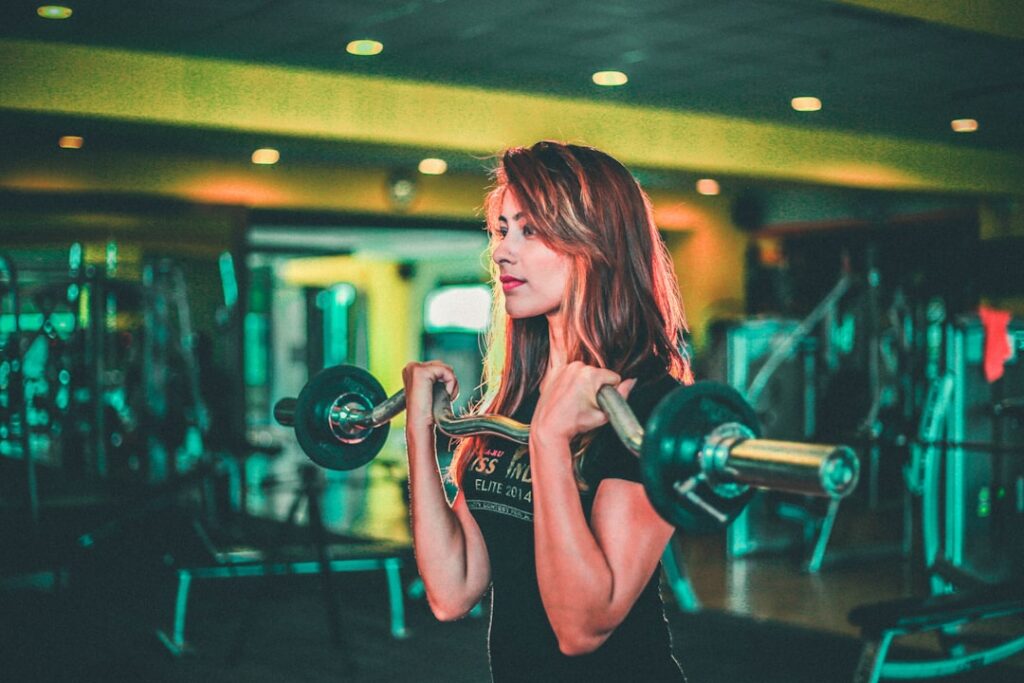
Devyn Dalton prepared to double Matt Damon in The Odyssey with a hybrid approach that combined bodybuilding, strength and conditioning, bodyweight training and combat work. In an August 2026 interview, Dalton also described a high-protein eating pattern and the use of creatine and electrolytes. The useful lesson is not to copy a celebrity routine. It is to match physical preparation to the performer, the doubling requirement and the production schedule.
As of 08/2026, this article separates Dalton’s reported training from TraceFit’s coaching analysis. TraceFit was not involved in the production or Dalton’s programme.
What changed?
- 08/2026: Added Dalton’s newly reported preparation for The Odyssey and the practical lessons for stunt performers.
- 08/2026: Cross-checked the training principles against the 2026 ACSM resistance-training position stand.
What did Devyn Dalton report about her Odyssey training?
Women’s Health reported that Devyn Dalton used a mix of bodybuilding, strength and conditioning, bodyweight exercise and combat sports while preparing to double Matt Damon. That combination makes sense for a role that needs a convincing physique, repeatable action and movement that reads correctly on camera.
Dalton also described protein-rich foods such as eggs and jerky, fruit including bananas, and the use of creatine and electrolytes. Those details show that the visible workout was only one part of the preparation. Food, hydration and recovery helped support the work.
| Reported component | Likely production purpose | What not to assume |
|---|---|---|
| Bodybuilding | Develop the silhouette and muscular detail required for the double | That appearance work alone prepares technical stunts |
| Strength and conditioning | Build force capacity and repeat-effort fitness | That every session should be maximal |
| Bodyweight training | Practise control, relative strength and portable training options | That bodyweight work is automatically low risk |
| Combat training | Support timing, movement quality and action vocabulary | That general fitness coaching replaces stunt or fight instruction |
| Protein, creatine and electrolytes | Support nutrition, training and hydration needs | That the same supplements or intake suit every performer |
Why can a female stunt performer double a male actor?
A screen double is selected for what the shot needs. Height, build, costume, camera angle, movement quality and the specific action can matter in different proportions. Dalton’s case is a reminder that doubling is a production solution, not a simple search for a person who looks identical from every angle.
The movement match still matters. A double may need to reproduce an actor’s stance, rhythm, posture and character energy while completing the required action safely under the stunt team. That is a performance task as much as a fitness task.
What can stunt performers learn from Devyn Dalton’s hybrid approach?
1. Build the qualities the shot actually needs
Preparation should begin with the production brief. If a role needs a specific upper-body silhouette, appearance work may receive more attention. If the action relies on repeated accelerations, falls or fight beats, the conditioning plan should reflect those demands without replacing technical rehearsal.
2. Combine capacities instead of chasing one gym number
Film action rarely rewards strength in isolation. A stunt performer may need strength, relative body control, mobility, repeat-effort capacity and enough recovery to reproduce the action across takes. TraceFit’s guide to hybrid athlete training for stunt performers explains how to balance those qualities across a week.
3. Change the plan when production starts
A demanding build phase can be useful before filming. During principal photography, fatigue from rehearsals, costume, travel, weather and repeated takes becomes part of the total load. The gym plan often needs less volume and fewer novel exercises. Read training between stunt jobs versus during production for that transition.
4. Treat physique work as performance support
The camera may require a particular look, but rapid changes can reduce training quality and recovery. A practical plan protects strength, technical practice, sleep and continuity. The goal is a physique the performer can maintain long enough to do the job, not a brief peak that disappears after one shoot day.
How could a production-ready week be organised?
The table below is a TraceFit example, not Devyn Dalton’s programme. Session content should be adjusted around the stunt coordinator, rehearsal plan, performer history and available recovery.
| Day | Primary work | Production purpose |
|---|---|---|
| Day 1 | Full-body strength with extra upper-body volume | Build force capacity and the required silhouette |
| Day 2 | Technical rehearsal plus easy aerobic recovery | Practise action while controlling total fatigue |
| Day 3 | Bodyweight control, mobility and trunk work | Maintain useful positions and relative strength |
| Day 4 | Combat or movement rehearsal under the stunt team | Develop timing and camera-readable action |
| Day 5 | Short strength session or rest, based on readiness | Maintain progress without forcing volume |
| Weekend | Recovery, light movement and schedule review | Prepare for the next production block |
Should other performers copy the Devyn Dalton workout?
No. Devyn Dalton’s reported routine reflects her body, career, role and production. A useful adaptation is to copy the planning logic: identify the visual and action demands, choose training that supports them, and reduce work that competes with rehearsal or recovery.
Creatine, electrolytes and high-protein foods are not a universal prescription. Performers with health conditions, medication use, dietary restrictions or unexplained symptoms should speak with an appropriately qualified healthcare professional. A fitness article cannot diagnose or provide individual medical treatment.
How does this connect to Fit2Film preparation?
TraceFit’s Fit2Film coaching builds physical preparation around the role and the production calendar. For a broader stunt framework, use the strength and conditioning guide for stunt performers. Actors can start with physical preparation for a film role.
Frequently asked questions
Who is Devyn Dalton?
Devyn Dalton is a stunt performer and actor who was reported by Women’s Health to have doubled Matt Damon in The Odyssey.
How did Devyn Dalton train for The Odyssey?
Devyn Dalton reported combining bodybuilding, strength and conditioning, bodyweight training and combat sports for The Odyssey.
Did Devyn Dalton follow only an arm workout?
No. The reported preparation used several training methods, while the visible upper-body result was one production requirement.
Should stunt performers copy Devyn Dalton’s programme?
Stunt performers should copy the role-specific planning principle, not assume that Devyn Dalton’s exact training or nutrition is suitable for them.
Sources and further reading
- Women’s Health: How Devyn Dalton trained to double Matt Damon in The Odyssey
- American College of Sports Medicine: 2026 resistance-training guidelines update
- TraceFit: Hybrid athlete training for stunt performers
Featured photo by Gursimrat Ganda on Unsplash.
About the author
Kundai Murapa is a Cape Town-based professional stunt performer and film-industry fitness coach. Working in film since 2012, he founded TraceFit to provide strength, conditioning and functional mobility programmes for actors, stunt performers and film crews.
Explore Fit2Film coaching for cast, stunt performers and crew.
