
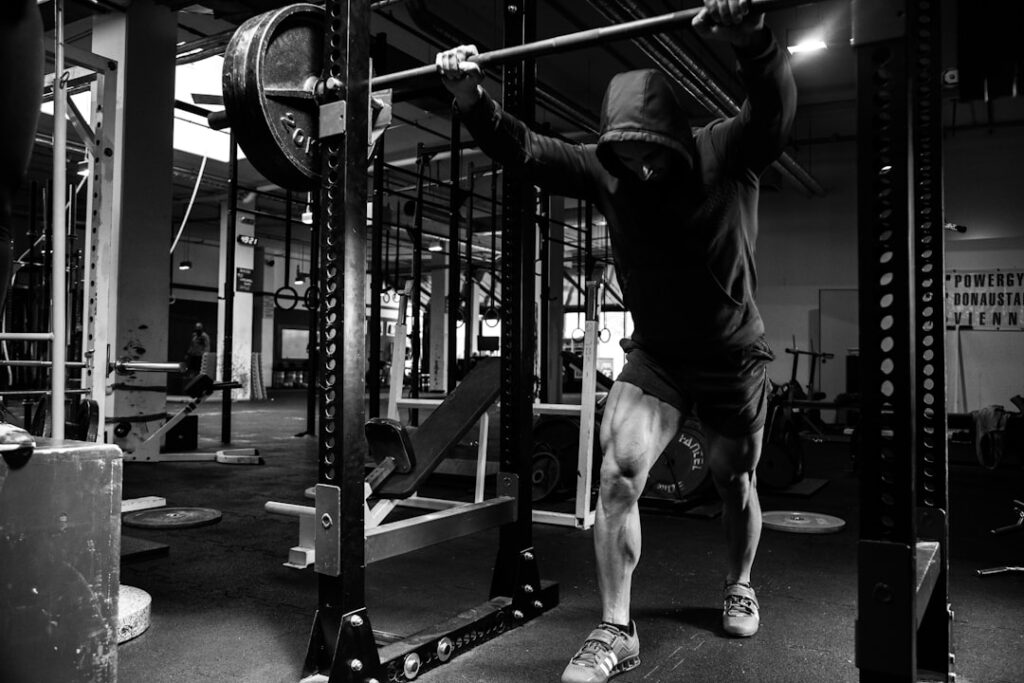
Strength and conditioning for stunt performers should develop usable force, active mobility, aerobic capacity and repeat-effort fitness while leaving enough recovery for technical rehearsal. The gym plan supports stunt work. It does not replace qualified instruction in falls, fights, wire work, vehicles, fire or any other technical discipline.
The strongest search opportunity in this cluster is stunt performer training. VibeSEO reports low competition and high commercial value in North America, so this guide is designed to answer the complete conditioning question clearly while separating safe physical preparation from technical stunt instruction.
Reviewed and updated 4 August 2026.
What should stunt performer training include?
| Quality | Why it matters | Training examples |
|---|---|---|
| General strength | Supports force production, load tolerance and position control | Squats, hinges, pushes, pulls, carries and trunk work. |
| Power | Develops force quickly when the role requires it | Low-volume jumps, throws or Olympic-lift derivatives with qualified coaching. |
| Functional mobility | Builds controlled range rather than passive flexibility alone | Loaded mobility, active range work and joint-specific strength. |
| Aerobic capacity | Helps recovery between rehearsals, takes and training sets | Walking, cycling, rowing, swimming or easy running. |
| Repeat-effort conditioning | Supports repeated short bursts of work | Controlled intervals, sled work and simple circuits. |
| Recovery capacity | Keeps training compatible with production | Sleep, nutrition, hydration and planned reductions in volume. |
How much strength work does a stunt performer need?
Most performers benefit from a small number of repeatable movement patterns trained consistently. The 2026 ACSM position stand notes that regular resistance training and coverage of the major muscle groups matter more than unnecessary complexity.
For stunt performers, the best exercises are the ones that build the required quality without creating avoidable soreness or interfering with rehearsal. A typical strength session may include one squat or split-squat pattern, one hinge, one push, one pull, a carry and focused trunk work.
Train strength through useful ranges
Strength should be available in the positions the performer can control. That is why functional mobility belongs inside the strength plan. A controlled split squat, overhead carry or row with rotation control can train range and force together.
Read the functional mobility guide for a production-friendly approach to movement breaks and active range work.
How should conditioning be organised?
Use two layers. First, build an aerobic base with easy work that can be repeated without heavy fatigue. Second, add brief higher-intensity intervals when the role or discipline requires repeated bursts. The exact mode depends on the performer’s background, joints, current rehearsal load and available equipment.
If strength and endurance are trained in the same week, separate the hardest sessions where possible and protect the priority quality. The hybrid athlete training guide for stunt performers explains this in detail.
A practical pre-production training week
| Day | Primary work | Notes |
|---|---|---|
| Monday | Full-body strength | Moderate volume with lower-body emphasis. |
| Tuesday | Technical class plus easy aerobic work | Technical work requires the appropriate stunt professional and facility. |
| Wednesday | Mobility and recovery | Use active ranges and low-fatigue movement. |
| Thursday | Full-body strength and controlled power | Keep power work low volume and high quality. |
| Friday | Technical rehearsal or repeat-effort conditioning | Do not stack both at high intensity. |
| Saturday | Easy aerobic work | Build capacity without chasing exhaustion. |
| Sunday | Rest or gentle movement | Adjust to the actual production schedule. |
This is an example, not a prescription. Previous injuries, current symptoms and specialist role requirements need individual assessment.
What changes once production starts?
The goal often shifts from building capacity to maintaining readiness. Reduce gym volume before demanding action days, avoid unfamiliar exercises and place hard lower-body training away from fight or movement rehearsals. When sleep and call times deteriorate, cut optional conditioning first.
The detailed comparison is in Training Between Stunt Jobs vs During Production.
Common stunt conditioning mistakes
- Using fatigue as the main measure of a good session.
- Training for appearance while neglecting aerobic fitness or controlled movement.
- Adding hard gym work on top of a full technical rehearsal schedule.
- Treating flexibility as passive stretching without active control.
- Practising technical stunts in an unsupervised fitness setting.
- Ignoring pain, concussion symptoms or other issues that require appropriate clinical care.
How do Cape Town, UK and North American productions affect planning?
The training principles stay consistent, but logistics change. Cape Town productions can involve heat, travel and location work. UK schedules may include cold or wet exterior calls. North American performers may move between union productions, local stunt training facilities and travel-heavy jobs. The plan should account for climate, time zones, facility access and the production’s own safety requirements.
Fit2Film Stunts provides online conditioning support in the UK, United States and Canada, with Cape Town-based coaching for local performers.
Frequently asked questions
What is the best workout for a stunt performer?
There is no single best workout. A complete plan combines strength, controlled mobility, aerobic fitness, role-specific conditioning and recovery around technical stunt practice.
How many days a week should stunt performers lift weights?
Two to four strength sessions may suit many adults in a development phase, but the correct number depends on technical training, production workload, experience and recovery.
Can gym training teach stunt skills?
No. Gym training develops physical capacity. Technical stunt skills require qualified instruction, appropriate facilities, risk assessment and production supervision.
Should stunt performers train to failure?
Routine training to failure is rarely necessary for general stunt conditioning and can add fatigue. Loads and effort should support technical quality and the production schedule.
For the broader movement framework, read Functional Mobility for Film Industry Professionals.
Sources and further reading
- American College of Sports Medicine: Resistance training guidelines update
- World Health Organization: Physical activity and sedentary behaviour guidelines
- Film and TV Charity: The impact of injury in production
About the author: Kundai Murapa is a Cape Town-based professional stunt performer and film-industry fitness coach. Working in film since 2012, he founded TraceFit to build strength, conditioning and functional mobility programmes around the realities of production.
