
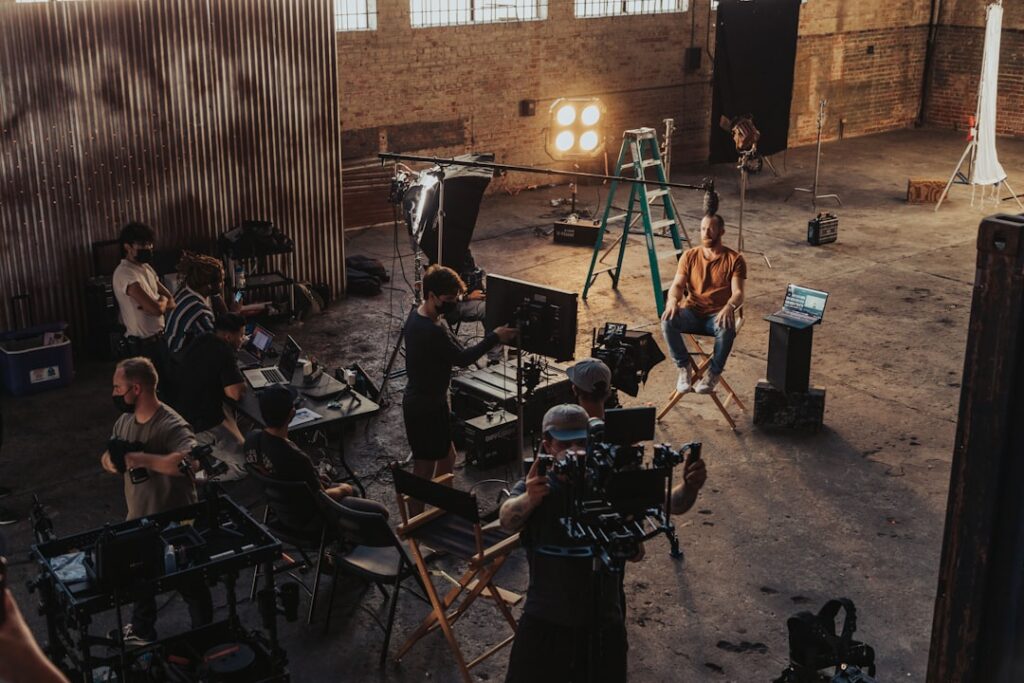
Updated: September 17, 2026
Creatine may reduce some of the decline in cognitive performance caused by a single period of sleep deprivation, but the evidence is preliminary and does not show that creatine makes night work safe. A 2026 study involved only 29 healthy adults, kept them awake for 21 hours and used a single dose of 0.2 grams per kilogram of body mass. That is about 14 grams for a 70-kilogram person, which is much higher than the usual daily maintenance dose.
For film professionals, the study is interesting because night shoots demand concentration, reaction speed and decision-making at the exact time the body expects to sleep. It is not a reason to replace sleep with a supplement.
What changed this week?
- A new randomized crossover trial tested a lower acute creatine dose during 21 hours of sleep deprivation.
- Creatine reduced deterioration in selected logic, processing-speed and vigilance measures by up to 12 percent.
- The study did not assess driving, stunt safety, production errors or repeated night-shoot schedules.
- The trial did not establish a high-dose creatine protocol for film crews or other night workers.
What did the 2026 creatine and sleep-deprivation study find?
The 2026 trial found that a single 0.2 g/kg dose of creatine was associated with less deterioration in several cognitive tasks during one night of sleep deprivation.
Twenty-nine healthy adults completed both creatine and placebo conditions in a double-blind randomized crossover design. The participants completed tests at baseline and again 3, 5.5 and 7.5 hours after taking the supplement. They remained awake for a total of 21 hours.
Compared with placebo, creatine reduced the decline in logical and numerical tasks, language-related processing speed and psychomotor vigilance. The researchers reported improvements of up to 12 percent. Some outcomes appeared stronger in female participants, although subgroup findings from a sample this small should be interpreted cautiously.
The study followed an earlier 2024 experiment using 0.35 g/kg. That earlier dose would equal 24.5 grams for a 70-kilogram person. The 2024 study also found changes in brain energy metabolism and less deterioration in cognitive performance during sleep loss.
These results support further research. They do not establish a standard on-set protocol.
| Study detail | What happened | What it means for film professionals |
|---|---|---|
| Participants | 29 healthy adults | Too small to represent every actor, performer or crew member |
| Sleep condition | 21 hours without sleep | Similar to an extreme production day, but still a controlled laboratory condition |
| Creatine dose | 0.2 g/kg once | Considerably higher than the common 3 to 5 g daily maintenance dose |
| Main result | Less decline in selected cognitive tests | Promising, but not proof of improved on-set safety or work quality |
| Missing outcomes | No driving, stunt or workplace-incident testing | The study cannot tell us whether creatine prevents production accidents |
Why might creatine affect the brain during sleep loss?
Creatine helps cells rapidly regenerate adenosine triphosphate, or ATP. ATP supplies usable energy for muscle contraction and cellular activity, including activity in the brain.
Sleep deprivation increases metabolic strain while reducing attention, processing speed and executive control. Researchers are investigating whether greater creatine availability can help the brain maintain its energy supply under that temporary stress.
The brain does not absorb supplemental creatine as readily as skeletal muscle. That is one reason cognitive studies have often used longer supplementation periods or acute doses well above standard fitness doses.
This distinction matters. A person taking 3 to 5 grams daily for training cannot assume that the supplement will reproduce an acute high-dose laboratory result during a night shoot.
Does this mean film crews should take a large dose before a night shoot?
No established guideline recommends taking a large acute dose of creatine before a night shift.
The 0.2 g/kg protocol was tested under supervision in a research setting. A dose of that size may cause gastrointestinal discomfort in some people, particularly when taken all at once. Trying an unfamiliar high dose during a working night could create a new problem rather than improve performance.
Creatine also does not correct the main consequences of insufficient sleep. A crew member can still experience microsleeps, impaired judgment, mood changes and unsafe driving even if one cognitive test declines less than expected.
The United States National Institute for Occupational Safety and Health warns that work-related fatigue can endanger the worker, colleagues and the public, particularly when a tired person drives home. Film productions should treat fatigue as a scheduling and safety issue rather than an individual supplementation problem.
Creatine versus proper fatigue management
| Strategy | Likely value during production | Main limitation |
|---|---|---|
| Protected sleep opportunity | Directly addresses sleep loss | Requires scheduling support and boundaries |
| Planned naps | Can temporarily improve alertness | Space and timing may be difficult on set |
| Caffeine | Can increase short-term alertness | Late use may disrupt recovery sleep and increase anxiety |
| Regular meals and hydration | Supports energy and concentration | Cannot reverse severe sleep deprivation |
| Creatine | May support some cognitive tasks under stress | Evidence is early and the tested acute doses were high |
| Wearable readiness scores | Can reveal trends in sleep and recovery | Estimates are not a clearance test for safety-critical work |
Creatine belongs, at most, in the supporting layer. Sleep opportunity, transport safety and workload management remain the primary controls.
What is a sensible creatine approach for a film professional?
Healthy adults who already use creatine for strength or repeated high-intensity work commonly take 3 to 5 grams of creatine monohydrate daily. Consistency matters more than timing for increasing muscle creatine stores.
That standard approach may suit actors, stunt performers and physically active crew members whose training includes strength, sprinting or repeated short efforts. It should not be marketed as a treatment for chronic fatigue or a licence to accept unsafe schedules.
People with kidney disease, those who are pregnant or breastfeeding, and anyone using medication that may affect kidney function should discuss supplementation with an appropriate medical professional. Creatine may also increase serum creatinine, which can affect the interpretation of a routine kidney-function blood test without necessarily showing kidney damage. Tell the clinician if you supplement.
What should a film professional do before a night shoot?
A practical night-shoot plan should begin before call time:
- Protect sleep in the preceding 24 hours where the schedule allows.
- Eat a balanced meal before the shift rather than relying on snacks and stimulants.
- Use caffeine early enough that it does not destroy the next sleep opportunity.
- Keep hydration available without forcing excessive fluid intake.
- Reduce optional hard training when production fatigue is already high.
- Arrange safe transport if alertness is impaired after wrap.
A workout, supplement or wearable cannot compensate for a production schedule that repeatedly removes adequate recovery.
Frequently asked questions
Does creatine keep you awake?
Creatine is not a stimulant and does not work like caffeine. Creatine supports cellular energy availability, but it does not directly create the alert feeling associated with stimulants.
Can creatine replace caffeine during a night shift?
No. Creatine and caffeine act through different mechanisms. Research on acute creatine during sleep deprivation is too limited to treat it as a caffeine replacement.
Should I take creatine immediately before call time?
For strength and training benefits, the usual priority is taking creatine consistently rather than timing it immediately before work. The acute sleep-deprivation research used experimental doses and should not be copied casually.
Will creatine prevent mistakes when I am tired?
There is no evidence that creatine prevents workplace mistakes, driving incidents or stunt injuries caused by fatigue. The research measured selected cognitive tests in controlled conditions.
Is creatine safe for healthy adults?
Creatine monohydrate is generally well tolerated in healthy adults at studied doses. A 2025 analysis covering 685 creatine trials found no overall increase in side-effect frequency compared with placebo. Individual medical circumstances still matter.
Fitness support built around production reality
Fit2Film Crew provides training, mobility and practical recovery support for people working around long calls, changing locations and unpredictable production schedules.
Join Fit2Film Crew or book a consultation.
Related reading
- Night-Shoot Recovery for Film Crew
- Wearable Recovery Data for Film Professionals
- Strength Training for Film Crew
Sources
- Gordji-Nejad A, et al. Single-Dose Creatine Reduces Sleep Deprivation-Induced Deterioration in Cognitive Performance. Nutrients. 2026.
- Gordji-Nejad A, et al. Single dose creatine improves cognitive performance and induces changes in cerebral high energy phosphates during sleep deprivation. Scientific Reports. 2024.
- Kreider RB, et al. Safety of creatine supplementation: analysis of reported side effects in clinical trials and adverse-event reports. Journal of the International Society of Sports Nutrition. 2025.
- NIOSH. Work-related fatigue reaches beyond the workplace.
Author: Kundai Murapa is an ISSA Certified Personal Trainer and Nutrition Coach, professional stunt performer, parkour athlete and founder of TraceFit Method. Link Kundai’s name to the existing author profile when publishing.
Featured image: Photo by Jakob Owens on Unsplash.
