
Updated: September 17, 2026
Ali Fazal’s reported preparation for Guddu Pandit in Mirzapur combined conventional strength work with mobility, agility and professionally coached combat disciplines. According to trainer Rohit Nair, the process lasted approximately eight to nine months and aimed to make Fazal leaner while preserving a broad, powerful frame.
The useful lesson is not to copy a push-pull-legs split or attempt combat training alone. Action-role preparation must address how the character looks, how the actor moves and what the production repeatedly asks the actor to do.
What changed this week?
In a September 2026 report, NDTV summarized details attributed to coach Rohit Nair about Fazal’s preparation. The article described a blend of strength training, functional work, mobility, agility, kickboxing, grappling and jiu-jitsu.
These are reported details rather than a complete independently verified training log. They provide a useful case study, but not enough information to recreate the exact program safely.
What did Ali Fazal reportedly do for Mirzapur?
| Reported element | Likely role in preparation | Important limit |
|---|---|---|
| Eight to nine months of preparation | Allowed time for gradual physical change and technical practice | Does not reveal the exact weekly workload |
| Push-pull-legs strength structure | Supported muscle and general strength | A split alone does not explain progression or recovery |
| Compound lifts | Developed force across large movement patterns | Exercise selection must fit the actor’s experience and injury history |
| Functional workouts | Connected strength to broader movement demands | “Functional” is too vague without specific tasks and outcomes |
| Mobility and agility | Supported usable movement options and direction changes | Should be selected for actual scene demands |
| Kickboxing, grappling and jiu-jitsu | Added supervised combat exposure and conditioning | Technical combat training requires qualified instruction |
The physique goal was reportedly specific: become leaner without losing the broad frame associated with Guddu. That requires a different plan from simply reducing scale weight as quickly as possible.
Why is bodybuilding alone incomplete for an action role?
Bodybuilding methods can be valuable. They help an actor add muscle, develop specific proportions and tolerate training volume. The limitation appears when the program addresses appearance but not performance.
An action role may require the actor to accelerate, stop, change direction, get up from the floor, hold awkward positions and repeat choreography across several takes. Costume, footwear, heat and set conditions can make those tasks harder.
A physique-focused program does not automatically develop:
- Efficient deceleration and direction changes
- Aerobic recovery between takes
- Coordination under fatigue
- Usable mobility in required positions
- Grip and trunk capacity for choreographed contact
- Familiarity with safely rehearsed screen combat
Those qualities need to be trained deliberately. Muscle can support them, but it does not replace them.
What does “functional training” mean for an actor?
The term becomes useful only when it refers to a defined function.
For an actor, the function is not balancing on unstable equipment or making every exercise look unusual. It is meeting the role and production demands with control.
A practical needs analysis might ask:
- What actions appear in the script?
- Which movements will the actor perform rather than a double?
- How long are the rehearsals and takes?
- What range of motion does the choreography require?
- How does the character need to look in costume?
- Which technical sessions are already creating fatigue?
The answers determine whether the gym program should emphasize leg strength, pulling capacity, repeated sprints, shoulder tolerance, aerobic work or another quality.
How should strength and combat training fit together?
Strength work should support technical sessions without degrading them.
Combat practice requires timing, attention and coordination. A high-volume lifting session that leaves the actor’s legs slow or shoulders exhausted can reduce rehearsal quality. Hard conditioning immediately before choreography can have the same effect.
An illustrative week might look like this:
| Day | Main focus | Programming intention |
|---|---|---|
| Monday | Full-body strength | Develop force with manageable volume |
| Tuesday | Supervised combat rehearsal | Prioritize technical quality and timing |
| Wednesday | Aerobic conditioning and mobility | Build recovery capacity at controlled intensity |
| Thursday | Strength and low-volume power | Maintain speed while fresh |
| Friday | Supervised choreography or combat practice | Apply movement to the production requirement |
| Saturday | Optional easy conditioning or targeted accessories | Address gaps without creating heavy fatigue |
| Sunday | Rest | Recover before the next training week |
This is an example, not Fazal’s reported weekly schedule. Actual programming should change with the filming calendar and the intensity of technical work.
Why does mobility matter in screen combat?
Mobility is usable range of motion, not simply the ability to hold a passive stretch.
Screen combat can require an actor to reach, rotate, lower their center of mass and recover from positions quickly. Limited range may force compensation. Uncontrolled range may be just as unhelpful.
Useful mobility work may include controlled ankle movement, hip rotation, thoracic rotation, shoulder range and strength at relevant end positions. The priority depends on the choreography and the actor.
Mobility sessions should not attempt to qualify someone to perform technical stunts. Falls, throws, weapons work and fight reactions require the production’s stunt and action professionals, suitable equipment and supervised rehearsal.
How can an actor get leaner without losing performance?
The reported brief for Fazal involved reducing body fat while retaining a broad physique. That requires enough time and a moderate approach.
Aggressive energy restriction can lower training quality, concentration and recovery. It can also make it harder to retain muscle. A more controlled plan combines progressive resistance training, sufficient protein, a manageable energy deficit where appropriate and regular review.
The production schedule matters. The hardest phase of a diet should not collide carelessly with the most demanding fight rehearsals. If coordination, mood, sleep or performance deteriorate, the total workload and food intake need review.
Major transformations should involve an appropriately qualified dietitian or medical professional, especially when the deadline is short or the actor has a relevant health history.
What can working actors learn from this preparation?
First, define the visual and action briefs separately. The visual brief describes what the character should communicate on camera. The action brief describes the scenes the actor must perform and repeat.
Second, start technical work early enough for learning. Fitness can improve the capacity to rehearse, but it cannot compress all skill acquisition safely into the final weeks.
Third, count every source of physical stress. Gym sessions, combat practice, fittings, travel and shooting all contribute to fatigue.
Fourth, maintain the qualities that matter during filming with the smallest effective dose. Once production begins, adding more gym volume is rarely the main objective.
Finally, do not imitate the dangerous-looking part of an action role. Professional screen action is planned through choreography, specialist supervision, risk assessment and controlled repetition.
Frequently asked questions
How long did Ali Fazal train for Mirzapur?
NDTV reported that trainer Rohit Nair described approximately eight to nine months of preparation.
What was Ali Fazal’s workout split?
The report mentioned a push-pull-legs structure and compound lifting alongside functional, mobility, agility and combat work. It did not publish a complete verified program with sets, repetitions and weekly progression.
Did Ali Fazal do martial arts for the role?
The report named kickboxing, grappling and jiu-jitsu as parts of the preparation. These disciplines require qualified coaching. Reading about them is not a safe substitute for supervised instruction.
Is bodybuilding useful for actors?
Yes. Bodybuilding methods can help build muscle and create the proportions a role requires. Action roles may also need conditioning, mobility, coordination and technical rehearsal.
How should actors combine lifting and fight rehearsals?
Protect the quality of technical sessions. Avoid placing excessive lifting volume or hard conditioning immediately before important choreography, and adjust the gym workload as rehearsals intensify.
Build the body and capacity the role requires
Fit2Film Actors develops role-specific strength, conditioning and mobility around the realities of rehearsals, action training, travel and production.
Join Fit2Film Actors or book a consultation for preparation involving a physical role and deadline.
Related reading
- Hybrid Athlete Training for Stunt Performers
- Stunt Performer Warm-Up
- Actor Transformation Without Crash Dieting
- Action-Role Training After 40
Sources
- NDTV Health. Guddu Pandit Workout for *Mirzapur*: How Ali Fazal Built His Physique for His Role. September 10, 2026.
Author: Kundai Murapa is an ISSA Certified Personal Trainer and Nutrition Coach, professional stunt performer, parkour athlete and founder of TraceFit Method. Link Kundai’s name to the existing author profile when publishing.
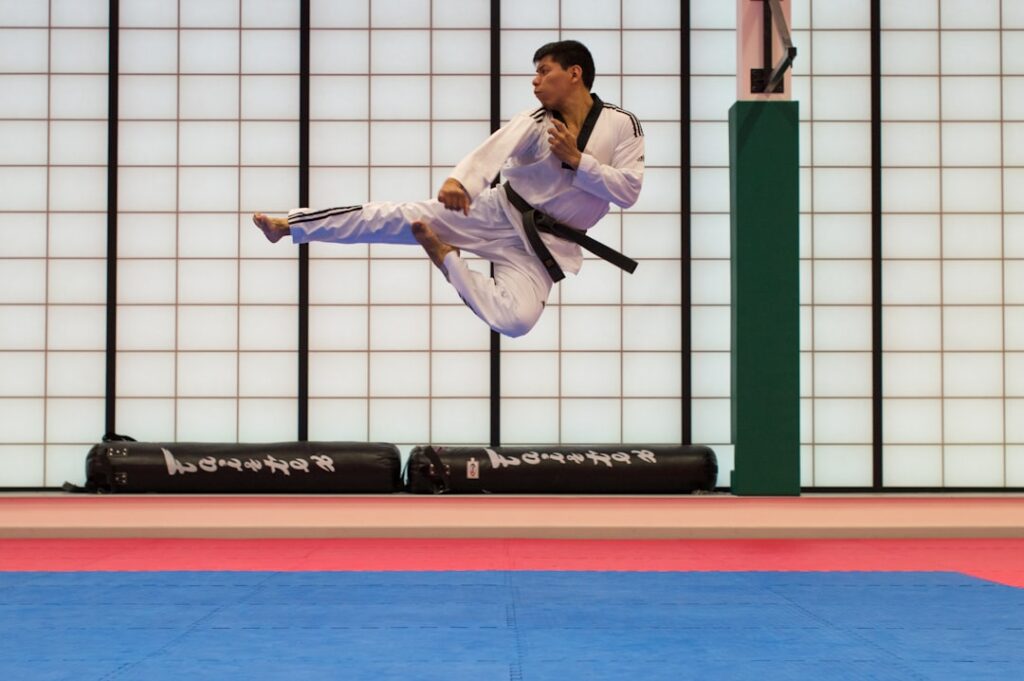
Featured image: Photo by Uriel Soberanes on Unsplash.
