
Updated: September 17, 2026
Anthony Ippolito says he trained for a year and a half to portray a young Sylvester Stallone in I Play Rocky. The production was initially expected to begin within six months, but a delay extended his preparation. He reportedly spent more than a year training independently before working with trainers Grant Roberts and Kirk Myers for the final five months.
That is the useful story behind the transformation. It was not a single celebrity workout. It was a long preparation period that changed as the production calendar changed.
What changed this week?
I Play Rocky premiered at the Toronto International Film Festival on September 12, 2026. In an interview published around the premiere, Ippolito described the nervousness of meeting Stallone and confirmed the length of his physical preparation.
The film is scheduled for a limited theatrical release on November 6, followed by a wider release on November 20, according to People.
What is confirmed about Anthony Ippolito’s training?
Public reporting confirms the duration and the trainers involved. It does not provide a full exercise list, weekly split, diet or verified body-composition data.
| Confirmed detail | What it tells us | What it does not tell us |
|---|---|---|
| Approximately 18 months of training | The transformation was built over a long runway | The exact number of weekly sessions |
| Filming was originally expected in six months | The first plan had a much shorter deadline | What the original program contained |
| More than a year of independent work | Ippolito established consistency before the final specialist phase | That he trained without any wider production support |
| Final five months with Grant Roberts and Kirk Myers | Coaching became more concentrated closer to filming | The exact exercises, loads or nutrition plan |
| The role portrays a young Sylvester Stallone | Physical likeness and performance both mattered | That copying Stallone’s historical routine was the objective |
Any article claiming to reveal Ippolito’s exact routine would be filling gaps that the available source does not answer.
Why did the 18-month timeline matter?
A longer preparation period allows an actor to build gradually, assess what is working and adjust around rehearsals or production changes. It also reduces the pressure to force rapid physical changes through excessive training or aggressive food restriction.
Eighteen months does not mean the actor should push at maximum intensity for eighteen months. A sound program changes emphasis across the timeline.
Early training may focus on general strength, movement quality and consistency. Later phases can direct more attention toward the character’s proportions, physical behavior and performance demands. As filming approaches, gym fatigue should become less important than the actor’s ability to rehearse, recover and deliver repeatable takes.
The delay in I Play Rocky appears to have given Ippolito more time to prepare. Production delays are often frustrating, but a training plan can use them productively when the workload is recalibrated instead of simply extended at full volume.
How is portraying a real person different from building a generic movie physique?
When an actor portrays a recognizable person, muscularity is only one part of the assignment. The audience may already know how that person stands, gestures, walks and occupies space.
Physical preparation can therefore involve:
- Developing the broad visual qualities required by costume and camera
- Studying posture, movement rhythm and physical habits
- Building enough capacity for repeated rehearsals and takes
- Supporting any boxing or action work taught by qualified specialists
- Maintaining facial expression, voice and acting choices while physically tired
For I Play Rocky, Ippolito was not simply playing Rocky Balboa. He was portraying Stallone during the creation of the original film. The performance needed to suggest a real person working toward a fictional character.
That distinction should shape the preparation brief. A coach can help the actor build physical capacity, but movement study, acting direction and any technical boxing work belong within a coordinated production process.
What might a long actor-preparation timeline look like?
The following is an illustrative framework, not Ippolito’s reported program.
| Phase | Possible duration | Main objective | Training emphasis |
|---|---|---|---|
| Foundation | 8 to 16 weeks | Make consistent training sustainable | Full-body strength, aerobic fitness, mobility and basic nutrition habits |
| Physical development | 12 to 24 weeks | Move toward the character’s visual brief | Progressive resistance training, appropriate food intake and regular progress reviews |
| Role integration | 8 to 16 weeks | Connect gym qualities to performance | Technical rehearsals, movement study and conditioning that reflects scene demands |
| Pre-filming | 4 to 8 weeks | Arrive prepared without excess fatigue | Maintain strength, refine role-specific work and reduce unnecessary volume |
| Filming | Production-dependent | Preserve the required look and function | Small effective training doses, recovery and schedule-based adjustments |
The phases can overlap. The important point is that the plan has priorities. Trying to maximize muscle gain, fat loss, conditioning, boxing practice and rehearsal volume at the same time can create more fatigue than useful adaptation.
What should an actor do when filming is delayed?
A delay should trigger a program review.
First, confirm what has changed. The new filming date, costume deadlines and rehearsal schedule affect how quickly the actor needs to progress.
Second, reduce urgency if the deadline has moved. An actor who was dieting aggressively may be able to return to a more sustainable intake. A high-volume training block may give way to maintenance before another development phase.
Third, retain the habits that created progress. More time is valuable only if the actor can keep training without accumulating pain, exhaustion or resentment.
Finally, avoid trying to hold a peak screen condition indefinitely. The leanest or most physically developed point of a transformation may be suitable for a short filming window, but it may not be appropriate to maintain through a long delay.
Why should actors be careful with celebrity workout details?
Public transformation stories usually leave out important information. They may not include the actor’s starting point, injury history, complete training volume, food intake, sleep, rehearsal load or access to professional support.
In this case, the missing details are particularly clear. We know that Ippolito trained for 18 months and worked with two named trainers near the end. We do not know his exact sets, repetitions, calories or supplements.
The responsible lesson is about process:
- Start as early as the production allows.
- Build a foundation before chasing the final look.
- Let the program change when the schedule changes.
- Coordinate physical training with performance work.
- Preserve enough energy to act.
That process is more transferable than a copied list of exercises.
How can working actors apply the same lesson on a smaller budget?
Most actors will not have an 18-month studio-supported runway. The principle still applies.
Maintain a basic level of strength and cardiovascular fitness between roles. When a role becomes likely, turn the script and creative brief into specific physical requirements. Use the available weeks to prioritize the largest gaps. If the role involves substantial weight change, previous injury or a compressed deadline, involve appropriately qualified health and nutrition professionals.
Even a simple program can be organized well:
- Two or three progressive strength sessions each week
- Aerobic work that improves recovery without disrupting rehearsals
- Short mobility work based on the actor’s actual restrictions
- Specialist instruction for boxing, dance, fighting or other technical skills
- Regular reviews against costume, camera and production needs
The objective is not to imitate a celebrity’s resources. It is to use the available time deliberately.
Frequently asked questions
How long did Anthony Ippolito train for I Play Rocky?
Ippolito told People that he trained for approximately a year and a half. He said he trained independently for more than a year and worked with Grant Roberts and Kirk Myers for the final five months.
What was Anthony Ippolito’s exact workout?
The available reporting does not provide a complete verified workout. It confirms the preparation timeline and trainers, but not a weekly split, exercise list, diet or supplement protocol.
Did Anthony Ippolito train as a boxer?
The film concerns Stallone’s effort to make Rocky, so boxing performance is relevant to the role. However, the cited interview does not provide enough detail to describe Ippolito’s exact boxing preparation.
Is eighteen months necessary for an actor transformation?
No. The appropriate timeline depends on the actor’s starting point, the role, the required physical change and the production schedule. More time usually permits a more gradual process.
What should actors do if a production is delayed?
Review the timeline, reduce any unnecessary urgency and reorganize the training phases. Actors should not try to maintain a short-term peak condition through an indefinite delay.
Prepare for the role, not only the reveal
Fit2Film Actors provides role-specific training, mobility and practical nutrition support built around auditions, rehearsals, travel and filming.
Join Fit2Film Actors or book a consultation for preparation involving a specific role and deadline.
Related reading
- Actor Transformation Without Crash Dieting
- The Matt Damon Odyssey Workout
- Action-Role Training After 40
Sources
- Juneau J. Anthony Ippolito Felt ‘Nervous’ to Meet Sylvester Stallone After Playing Him in *I Play Rocky*. People. Updated September 13, 2026.
- Reuters. Sylvester Stallone’s life is ‘real Rocky Balboa story,’ *I Play Rocky* director says. September 13, 2026.
Author: Kundai Murapa is an ISSA Certified Personal Trainer and Nutrition Coach, professional stunt performer, parkour athlete and founder of TraceFit Method. Link Kundai’s name to the existing author profile when publishing.
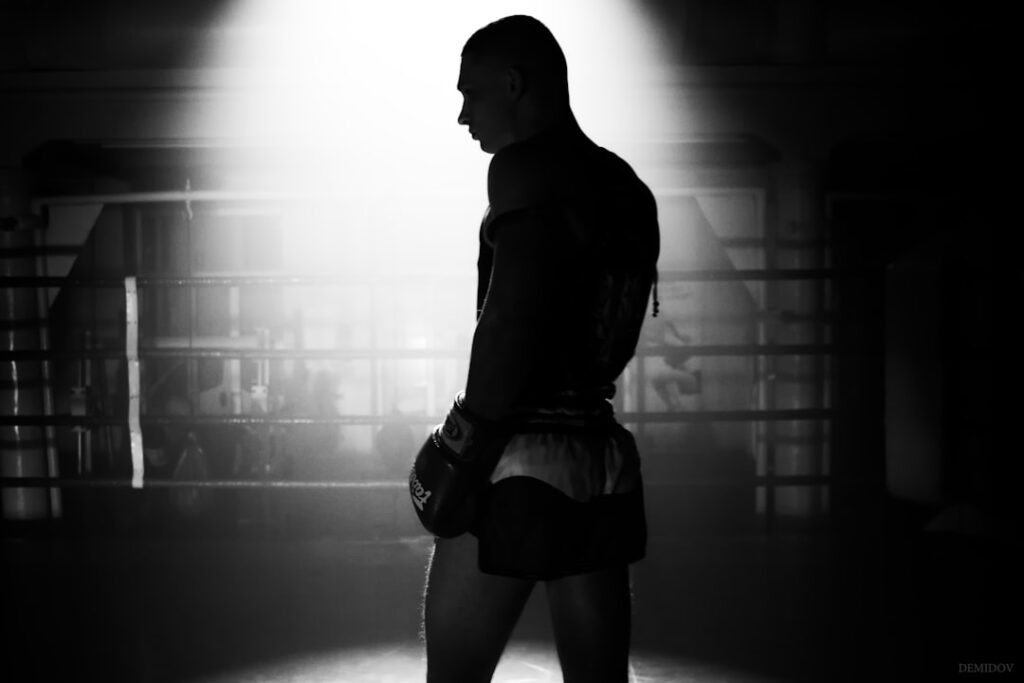
Featured image: Photo by Jeka Demidov on Unsplash.
